
Reading time: 4 minutes
Most founders don’t realize their bookkeeping is a mess not because the problems are hidden, but because quietly broken books look fine on the surface. Numbers exist. Reports run. QuickBooks opens without error. But the records haven’t been reconciled in months, the reports don’t reflect reality, and there’s a nagging feeling that something is off.
That feeling is usually right.
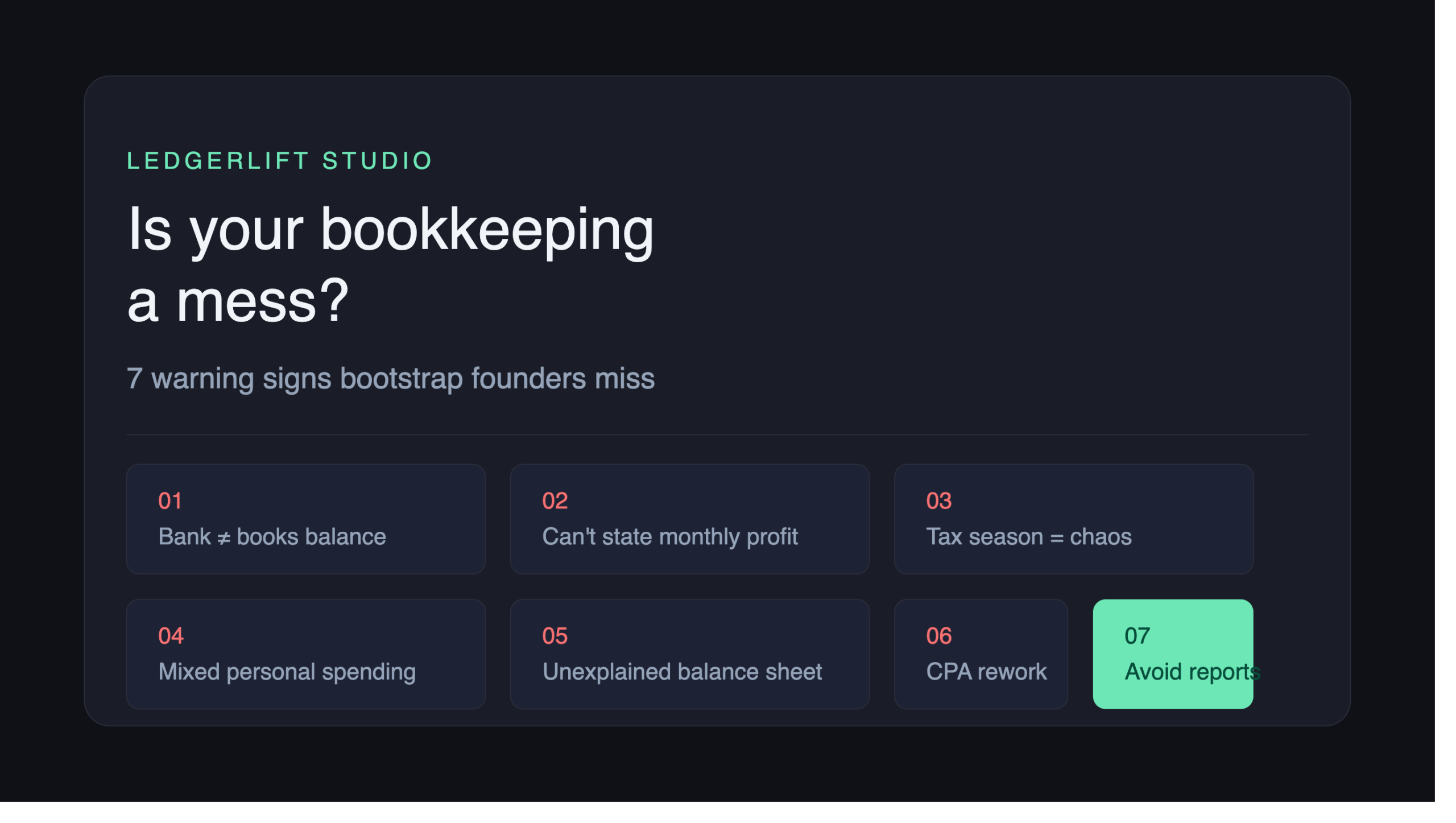
Here are seven signs your bookkeeping is a mess and what to do about each one.
1. Your bank balance and QuickBooks balance don’t match
This is the clearest signal. If you open your books and the number doesn’t match your actual bank account, your records are unreliable. Full stop.
It usually means accounts haven’t been reconciled in months transactions were entered, but no one verified them against the actual bank statements. The longer this goes unaddressed, the harder it is to untangle.
What it means: You can’t trust any number in your books until reconciliation is current.
2. You don’t know your actual profit right now
Not last quarter. Not at tax time. Right now this month, based on current numbers.
If you can’t pull a Profit & Loss report and trust what it says, your bookkeeping isn’t functioning as a financial system. It’s functioning as a transaction log. Those are very different things.
What it means: You’re making decisions on hiring, pricing, spending — based on guesses instead of data.
3. Tax season turns into a scavenger hunt
If you spend February and March hunting receipts, chasing invoices, and explaining categories to your accountant, your books weren’t maintained during the year. You’re doing catch-up work under deadline pressure, which is both expensive (your CPA bills by the hour) and error-prone.
Clean books throughout the year make tax season boring. Boring is good.
What it means: You’re paying your CPA to be a bookkeeper, not a tax strategist.
4. Business and personal spending are mixed
Even one personal charge on a business account creates categorization problems that ripple through your reports. At low revenue, founders sometimes get away with this. At $50K+ revenue, mixed spending is a reliable source of bad numbers.
If you’re still pulling from the same account for business and personal expenses, your P&L is lying to you.
What it means: Your profit number is wrong. It might be wrong in either direction.
5. Your balance sheet has numbers you can’t explain
The balance sheet is where bookkeeping errors collect over time. Negative balances in accounts that shouldn’t go negative. Loan balances that don’t match your actual payoff amount. Owners equity that doesn’t make sense.
Most founders never look at the balance sheet because it’s confusing. That confusion is usually a sign it hasn’t been maintained.
What it means: The errors aren’t just cosmetic, they affect your true financial picture and can create problems at tax time or if you ever need financing.
6. Your accountant keeps asking for the same documents
If your CPA or accountant sends you the same requests every year — prior statements, missing receipts, clarification on transactions it means the underlying records aren’t organized in a way that makes their job easy.
A well-maintained set of books should make your CPA’s job faster, not harder. When it goes the other direction, you’re paying for the inefficiency.
What it means: Your bookkeeping system isn’t working for your team it’s working against it.
7. You avoid looking at your reports
This one is quieter than the others, but it’s often the most telling.
If you don’t check your financials regularly because you don’t trust them or because looking at them creates more confusion than clarity, the system has failed at its primary job. Financial reports exist to help you make decisions. If you’re not using them, either the numbers are wrong or the system is too hard to read.
Either way, something needs to change.
What it means: You’re running your business on instinct instead of information.
Is your bookkeeping a mess? The fast self-check
Answer these three questions:
- Can you tell me your profit for last month right now?
- Do your bank balances match what’s in your books?
- Can you find any receipt or invoice quickly if you needed it?
If you answered no to any of them, your bookkeeping needs attention, not eventually, but before those gaps compound further.
What to do next
The good news: messy books aren’t permanent. They’re a backlog problem, not a fundamental one.
The fastest path depends on how far behind you are:
If you’re 1–3 months behind: A structured cleanup using a proper monthly close process can usually get you current without outside help. Start with the most recent month and work backward.
If you’re 3–12 months behind: The backlog is large enough that catching up yourself will take significant time and there’s real risk of guessing on transactions you don’t remember. This is where a professional cleanup makes economic sense.
If you’re not sure where you stand: Start with the LedgerLift diagnostic, it takes about two minutes and tells you exactly what financial level you’re operating at and what needs to happen next.
The goal isn’t perfect books forever. It’s books you can trust enough to make real decisions from. That’s achievable. It just requires the right starting point.
Related reading:
- Why the Bookkeeping Reset Comes Before the System
- What the LedgerLift Diagnostic Actually Measures
- The LedgerLift Product Lineup: Which System Is Right for You?
LedgerLift Studio builds custom financial database systems for bootstrap founders. If your books are behind and you want a structured cleanup with a fixed price and 14-day turnaround, the Bookkeeping Reset starts with a free 15-minute call — so you’re ready for a system that actually runs your business.
Leave a Reply